USD
USD  GBP
GBP  CAD
CAD  INR
INR  AUD
AUD  SGD
SGD 

Compare Standard vs Wildcard SSL Certificates – Understand How Domain and Subdomain Coverage Differ
Every public site runs on an SSL certificate, and browsers now treat HTTPS as the baseline standard. The real question is which type fits your setup. If you’re comparing a Wildcard SSL certificate vs a Standard SSL certificate, the difference is scope.
A Standard SSL certificate secures one fully qualified domain name. A Wildcard SSL certificate secures the primary domain and all its first-level subdomains under a single installation.
If you manage multiple subdomains, staging environments, client portals, or separate services under the same root domain, certificate planning becomes operational. This comparison breaks down how both certificate types differ in coverage, cost impact, and certificate management so you can see where each one fits.
What is a Standard SSL certificate?
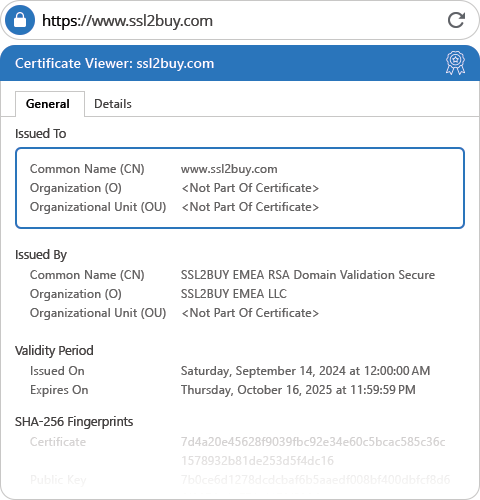
Regular SSL certificate or Standard SSL certificate is Domain Validated SSL certificate. It secures only one primary domain or one sub-domain of your website at one time. This certificate issued by the Certificate Authority (CA), is an entry level certificate and it provides the lowest level of validation.
They are the best for individuals or small businesses having a single website without any additional sub-domains.
For e.g. Regular SSL certificate only covers website https://www.example.com.
Deployment is straightforward: generate the CSR for the exact domain name, complete validation, install, and serve traffic over HTTPS.
What is a Wildcard SSL certificate?
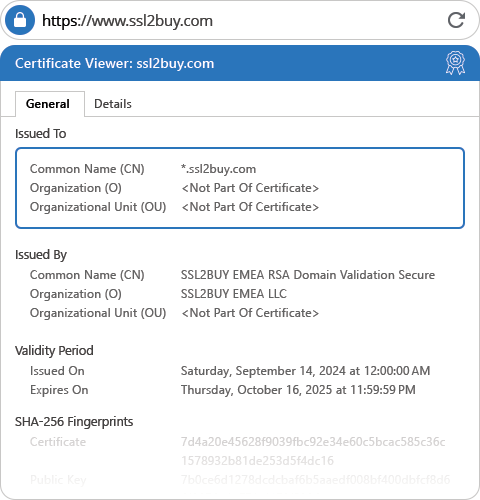
Wildcard SSL certificate secures your primary domain and its unlimited first level sub-domains with one single certificate. In short, SSL encryption is extended to sub-domains by using wildcard SSL. An asterisk “*” is placed before the domain name thus securing all additional sub-domains.
It’s an all in one certificate, which is cost-effective and time saver, meant for medium or large businesses.
For e.g. If your website is https://*.yoursite.com, Wildcard SSL certificate covers sub-domains like https://blog.yoursite.com, https://www.yoursite.com, https://any.yoursite.com, https://email.yoursite.com etc.
You can even add new subdomains during the certificate of lifecycle, without any separate purchase. Instead of tracking individual certificates for each hostname, one wildcard certificate secures the entire first layer under the domain.
Similarities Between Wildcard Certificate and Standard SSL certificate
Before going for comparisons and differences between wildcard certificates and regular certificates, let’s have an insight into some of the similarities between both these security certificates.
- Online issuance in a few minutes
- Budget-friendly prices
- 99% browser and mobile compatibility
- 24/7 customer support
- 256-bit HTTPS encryption using 2048-bit RSA keys and SHA-256 hashing
- Unlimited server installations and free of cost reissues
- Warranty
- Free Site Seal
- 30-day Money-back guarantee
Both these certificates provide strong encryption security and are compatible with all browsers.
 |
|
|
PrimeSSL DV Certificate |
PrimeSSL DV Wildcard Certificate |
|
| Price (per year) |
$6.00
|
$35.00
|
|---|---|---|
| BUY NOW | BUY NOW | |
| Vendor Price |
$15.00
|
$75.00
|
| Product SKU | S2BPRM201 | S2BPRMWC202 |
| Certificate Authority | PrimeSSL | PrimeSSL |
| Category | Single Domain SSL | Wildcard SSL Certificate |
| Validation Method | Domain Control Validation | Domain Control Validation |
| Domains Secured | FQDN (www+non-www) | Root Domain and All Sub-Domains |
| Additional Domain Support | No | No |
| Delivery Time | 10 Minutes | 10 Minutes |
| Supported Key Type(s) | RSA, ECC | RSA, ECC |
| Supported Key Length(s) | 2048 bit | 2048 bit |
| Hash Algorithm | SHA-2 | SHA-2 |
| Server Licenses | Unlimited | Unlimited |
| Certificate Reissuance | Unlimited and Free of Cost | Unlimited and Free of Cost |
| Device Compatibility | 100% | 100% |
| Trust Site Seal |  |
|
| CA Warranty | $10,000 USD | $50,000 USD |
| Vendor Refund Policy | 30 Days | 30 Days |
| Technical Support | Free Live Chat and Ticket Support | Free Live Chat and Ticket Support |
| Installation Service | Purchase on Demand | Purchase on Demand |
Differences Between Wildcard Certificate and Standard SSL Certificate
Here’s the side-by-side comparison between standard SSL and wildcard SSL certificate, without the marketing spin.
| Feature | Standard SSL Certificate | Wildcard SSL Certificate |
|---|---|---|
| Domain Coverage | Secures one fully qualified domain name (WWW and non-WWW) | Secures the primary domain (WWW and non-WWW) + all first-level subdomains |
| Subdomain Support | No subdomain coverage | Unlimited first-level subdomains under the same root |
| CSR Configuration | If your domain is example.com, then while generating CSR, in the domain field you need to enter: www.example.com or example.com | If your domain is example.com, then while generating CSR, in the domain field you need to enter: *.example.com |
| Validation Availability | Single-domain certificates are available in DV, OV, and EV formats. | Available in DV and OV |
| Typical Use Case | Single website with no additional subdomains | Environments running multiple subdomains on one root domain |
| Cost Structure | Lower entry price due to single-domain scope | Higher price reflecting multi-subdomain coverage |
| Algorithms & Signature | SHA-2 hashing with 2048-bit RSA (ECC where supported) | SHA-2 hashing with 2048-bit RSA (ECC where supported) |
| Encryption Strength | 256-bit HTTPS encryption | 256-bit HTTPS encryption |
| Key Length | RSA 2048-bit / ECC 256-bit | RSA 2048-bit / ECC 256-bit |
Conclusion
A Standard SSL certificate is fine when you run one site and that’s it. It’s inexpensive, quick to issue, and easy to replace. The moment you start adding subdomains, the overhead shows up. Every new subdomain means another certificate, validation cycle, and expiration date to track. That’s how renewal gaps happen.
A Wildcard SSL certificate changes that model. One certificate secures the primary domain and all first-level subdomains under it. From an operational standpoint, that cuts down coordination and reduces the risk of something slipping through.
So the real difference isn’t technical capability; it’s scale. One domain, keep it simple. Growing subdomain footprint, consolidate it and manage the key like it actually matters.
Related Articles: