 GBP
 CAD
 INR
 AUD
 SGD

Prime EV Code Signing Certificate
An affordable EV code signing option for software publishers that already use an existing qualified HSM infrastructure.
Starting at $299.00/ year
 Verified Logo & Email Blue Tick from


 USD ($)
Extended Validation (EV) Code Signing aligns with how modern operating systems evaluate software – by considering both the digital signature and the identity of the publisher behind it. Built on a more rigorous identity verification process, an EV code signing certificate is used by organizations distributing commercial software, enterprise applications, and security products, as well as developers publishing Windows kernel-mode drivers.
Learn how EV Code Signing works, who benefits from it, and how to choose the right certificate authority for your organization.
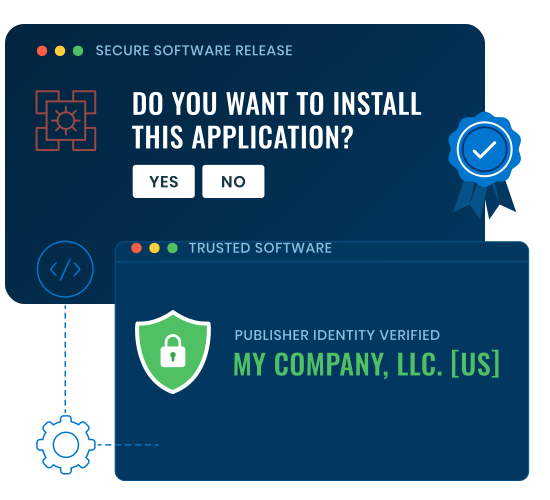
Every EV Code Signing Certificate delivers the same core security benefits but differs in pricing, delivery options, and certificate authority reputation. Explore each option to find the certificate that best aligns with your software publishing and organizational requirements.
An affordable EV code signing option for software publishers that already use an existing qualified HSM infrastructure.

A practical EV option for software publishers that need stronger identity validation for commercial applications and executable code.

The familiar Comodo product line, delivering the trusted Extended Validation required for secure software distribution.

Built for compliance-driven organizations and kernel-mode driver publishers, with enterprise-grade support and Azure Key Vault delivery.
EV Code Signing is designed for organizations that need higher identity assurance, specific compliance requirements, or stronger publisher trust. Explore where Extended Validation is required – and where it provides the greatest value.

Your organization submits Windows drivers and needs an EV certificate for registration in the Microsoft Windows Hardware Developer Program.

Your industry or a specific security framework mandates Extended Validation for signed software — not just an internal preference.

You distribute software across enterprise environments where stronger publisher validation supports customer trust and procurement requirements.

Your product’s credibility is tied directly to publisher trust, and an EV certificate reinforces the same security posture you’re selling.
Before an EV Code Signing Certificate is issued, the certificate authority performs a more comprehensive identity verification process to confirm your organization’s legitimacy and authority of the individual requesting the certificate.
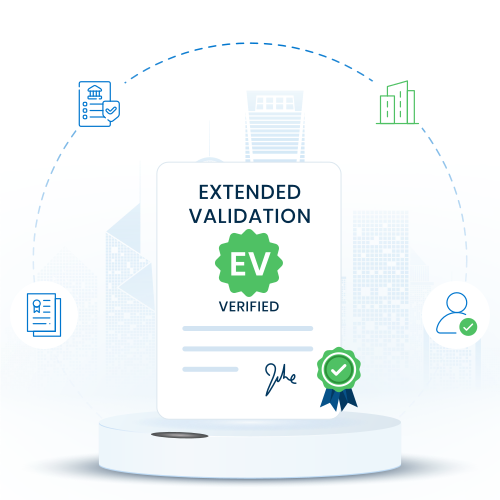
Your organization’s legal status is confirmed against multiple independent government and business registries.
The certificate authority confirms your organization occupies a verifiable physical business location.
Your organization’s active operating status is independently confirmed through third-party business data sources.
A named individual is verified as authorized to request the certificate on the organization’s behalf, confirmed directly through a corporate contact.
An EV Code Signing Certificate doesn’t disable Microsoft SmartScreen or bypass its security checks. SmartScreen evaluates both software reputation and the verified identity of the publisher before deciding whether to display a warning.

Microsoft verifies the identity of the software publisher.

The code signing certificate is validated by Microsoft.

Microsoft evaluates the software’s reputation based on real-world downloads and usage.

SmartScreen decides whether to display a warning based on the combined trust signals.
Historically, EV certificates received positive SmartScreen reputation by default, but Microsoft removed this behavior in 2024. EV and OV certificates now build SmartScreen reputation the same way, based on publisher reputation and file-hash reputation. EV remains relevant for higher-assurance identity validation and is required to register for the Microsoft Windows Hardware Developer Program, but it no longer accelerates SmartScreen reputation.
Choosing EV involves more than SmartScreen reputation. The way your software is distributed, your business requirements, and the level of publisher trust you need should also influence the decision.
| If your situation is… | Better fit |
|---|---|
| Windows kernel-mode driver | EV — Usually required |
| Large, anonymous consumer download audience | EV – preferred |
| Compliance mandate or strict procurement policy | EV |
| Internal or enterprise-distributed software | OV is often sufficient |
| No EV-specific platform or procurement requirement | OV is often sufficient |
From placing your order to signing software, the process follows five stages, including the additional identity checks required for Extended Validation.
Select your certificate authority and preferred signing method to begin.
The CA verifies your organization’s legal existence, physical premises, operational status, and requester authority through independent sources.
After approval, your certificate is issued digitally or prepared with the selected hardware token for shipment.
Activate the delivered token or provision the certificate through your existing HSM or Azure Key Vault environment.
Use your issued EV certificate to sign applications with your verified publisher identity.
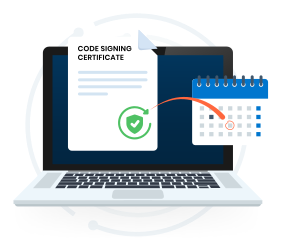
EV Code Signing Certificate renewal requires the same depth of verification as a new certificate – legal existence, physical premises, and requester authority are all reconfirmed, not carried over from your previous certificate.
Start the renewal process before your current certificate expires. A lapsed EV certificate means restarting full validation rather than a quick reactivation, so timing the renewal ahead of expiration is important.
Find answers to practical questions about EV validation, certificate use, and signing environments.


