 GBP
 CAD
 INR
 AUD
 SGD

Prime OV Code Signing Certificate
A practical OV code signing option for organizations and eligible individual developers that already use a qualified HSM.
Starting at $199.00/ year
 Verified Logo & Email Blue Tick from


 USD ($)
An OV Code Signing Certificate verifies your organization’s identity — replacing the “Unknown Publisher” warning with your verified company name when users install or run your software. It is designed for registered businesses and software publishers signing desktop applications, installers, executables, scripts, and internal tools.
Compare leading OV Code Signing Certificates, understand the organization validation process, and choose the right certificate for the way your organization develops and distributes software.
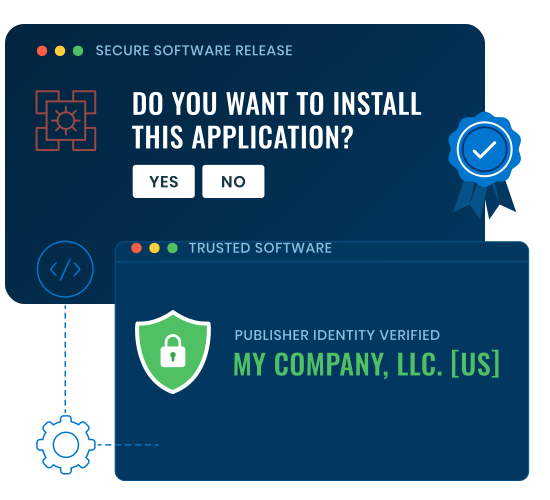
All Organization Validation code signing certificates verify your business identity and comply with the CA/Browser Forum Code Signing Baseline Requirements. The main differences are certificate authority, pricing and supported signing options.
A practical OV code signing option for organizations and eligible individual developers that already use a qualified HSM.

Organization Validation code signing from Sectigo for commercial software publishers seeking a practical, cost-efficient certificate.

OV code signing from the established Comodo certificate line. A straightforward choice for signing commercial and internal software.

Well suited for organizations with formal procurement requirements and structured software release processes.
Whether you publish software directly, deploy applications internally, or distribute through partners, OV is designed for organizations that need a verified publisher identity. Find the software publishing scenario that best matches your organization.

You publish software under a registered business identity as an independent developer or small software team. OV provides a verified publisher identity for the applications, installers, and utilities you distribute.

You distribute applications, installers, or utilities directly to customers under your company name. OV provides a verified publisher identity before your software reaches your customers.

You sign software used within your organization, including internal tools, scripts, and deployment packages. OV provides a verified publisher identity for software distributed across managed devices and enterprise environments.

Your software is distributed through partners, OEMs, resellers, or managed service providers before reaching customers. OV provides a consistent, verified publisher identity across partner and OEM software distribution.
Before an OV Code Signing Certificate is issued, the certificate authority verifies key aspects of your organization to establish a trusted publisher identity. These independent validation checks confirm that your business is legitimate, operational, and authorized to request a code signing certificate.
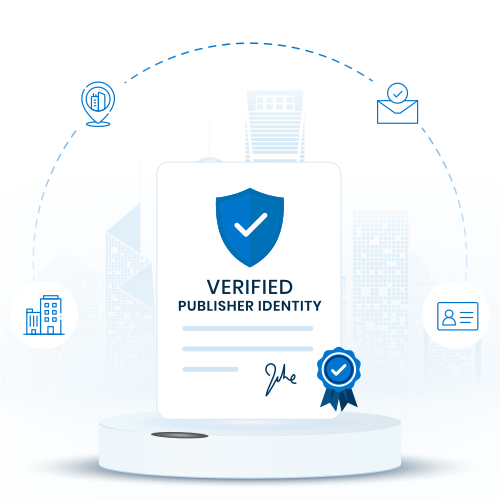
Your business must be legally registered and active, with its official name matching government or recognized business registry records.
Your organization’s physical address and contact details are independently verified using trusted third-party business data sources.
The certificate request must be authorized using your organization’s verified contact information before the certificate can be issued.
The identity of the individual requesting the certificate is verified to confirm they are authorized to act on behalf of your organization.
Validation is completed before an OV Code Signing Certificate is issued. Once issued, your verified organization name appears as the software publisher during installation, helping users confirm the software comes from an identified organization.
Your business qualifies for standard Organization Validation.
You need a verified publisher identity for your software.
You’re signing applications, installers, executables, libraries, scripts, or other software distributed under your organization’s name.
Your customers, partners, or software distribution process require organization-validated code signing.
Your organization doesn’t have procurement, compliance, or platform-specific requirements for Extended Validation.
This is your first code signing certificate or your software doesn’t specifically require EV.
Consider an EV Code Signing Certificate if your organization has procurement, compliance, or Microsoft Hardware Dev Center requirements that specifically call for Extended Validation.
From placing your order to signing your applications, the process follows five straightforward stages.
Choose your certificate authority, term, and preferred signing setup before completing your purchase.
The certificate authority verifies your applicant details and confirms that the certificate request is authorized.
Once validation is complete, your certificate is issued based on your selected signing setup.
Configure your delivered token or complete certificate provisioning with your existing HSM or Azure Key Vault.
Use your certificate and protected private key to sign software with your verified publisher identity.
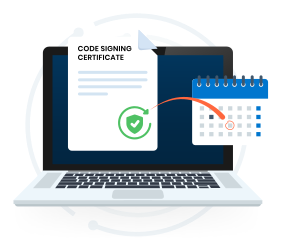
OV code signing certificates require organization validation during renewal before a new certificate can be issued. When your organization’s legal details and authorized contacts remain unchanged, the process is generally more straightforward.
Start the renewal process before your current certificate expires to avoid interruptions to scheduled software releases. You can also review your signing method or move to an EV Code Signing Certificate if your compliance, procurement, or platform requirements have changed.
Direct answers to the most common questions about OV eligibility, validation, issuance, storage, and renewal.


