USD
 GBP
 CAD
 INR
 SGD

Prime OV Code Signing Certificate
Organization Validation for developers already signing through their own hardware.
AU$280.59/ year
 Verified Logo & Email Blue Tick from


 AUD (AU$)
Choose a trusted code signing certificate that fits your software, organization, and signing workflow. Compare OV and EV validation paths, deployment options, and cloud-based signing solutions from leading Certificate Authorities.
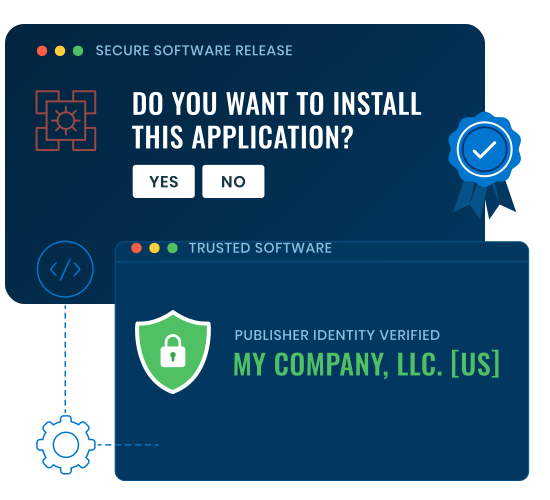
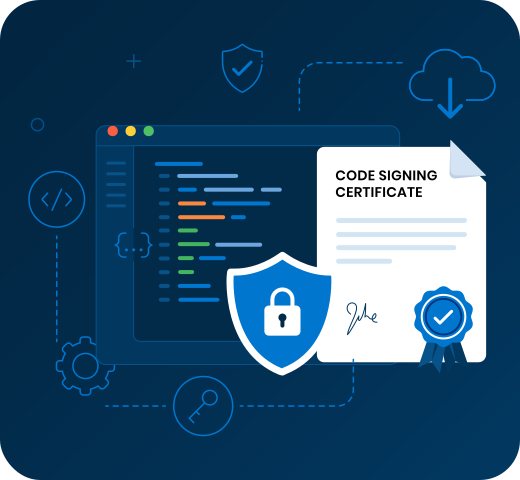
Code signing is the process of digitally signing software, applications, drivers, scripts, and other executable code. It confirms two things: who published the software and that the code has not been altered since it was signed.
A code signing certificate binds a verified publisher identity to software through a cryptographic signature. For developers and software companies, this gives users greater confidence that downloaded code comes from a legitimate source and remains intact from signing to installation.
Compare code signing certificates from Prime, Comodo, Sectigo, and DigiCert. Review OV and EV options and current pricing to find the right certificate for your software and signing workflow.
Organization Validation for developers already signing through their own hardware.

Organization Validation for independent developers and software publishers.

Organization Validation for commercial software teams and businesses.

Organization Validation with enterprise-grade support and reliability.
Extended Validation for teams signing with their own qualified HSM.
Extended Validation for high-assurance software signing and distribution.
Extended Validation for enterprise publishers and commercial software.
Extended Validation for compliance-driven organizations and critical applications.
Organization Validation for developers already signing through their own hardware.
Organization Validation for independent developers and software publishers.
Organization Validation for commercial software teams and businesses.
Organization Validation with enterprise-grade support and reliability.
Extended Validation for teams signing with their own qualified HSM.
Extended Validation for high-assurance software signing and distribution.
Extended Validation for enterprise publishers and commercial software.
Extended Validation for compliance-driven organizations and critical applications.
The right code signing validation path depends on your organization’s software distribution model, security requirements, and the type of software you publish. Choose between two primary validation paths: OV and EV.

Choose an OV code signing certificate when verified publisher identity and trusted software distribution are the primary requirements for your applications, executables, scripts, or other signed code.

Choose an EV code signing certificate when software requires signing Windows kernel-mode drivers, needs stronger identity validation, or must meet specific corporate validation requirements.
Choose a delivery model that matches where, how often, and by whom your software is signed.

Your certificate ships on a FIPS-compliant USB hardware token that plugs into the signing machine. This is the default delivery method for most OV and EV certificates and works well for a single, controlled signing workstation.

Use qualified hardware you already control to generate and protect the signing key. Compatible options may include YubiKey 5 FIPS devices and Luna Network HSM 7 or later, depending on the certificate authority and product configuration.

Your private key lives in Microsoft’s cloud HSM instead of a physical token, so your CI/CD pipeline can sign builds automatically or teams can work without passing around USB devices.
The right code signing certificate depends on your organization type, the software you publish, and how your signing workflow operates. Start with your use case to identify the validation level and certificate option that best fits your needs.
You publish applications, installers, or utilities under a registered business identity and need a verified publisher name for distribution.
You regularly distribute software under your company name and need verified identity without requirements that call for Extended Validation.
Your security framework, procurement requirements, or distribution process specifically calls for higher-assurance publisher validation.
You publish Windows kernel-mode drivers and need to meet the identity and signing requirements tied to driver submission.
Code signing supports widely used operating systems, application environments, and signing workflows across modern software development and distribution.








Having the right information ready can help prevent avoidable validation and issuance delays. What you’ll need depends on your certificate type, signing method, and whether you’re placing a new order or renewing an existing certificate.
Active company registration details that can be verified during organization validation.
Verifiable business contact information the CA can use during validation.
Identity or business documents requested by the Certificate Authority to verify the requester and organization.
Know whether you plan to use a hardware token, HSM, or supported cloud signing environment to select the right certificate and delivery method.
An active Azure subscription and appropriate Key Vault setup if you plan to use Azure Key Vault for code signing.
Your current certificate and organization information when renewing or reviewing your signing setup.
The process is straightforward: choose your certificate, complete CA validation, receive and configure your certificate, and renew before expiry. SSL2BUY’s validation specialists assist throughout, especially during CA review.
Choose your subscription term and selected provisioning method for enrollment.
Complete CA validation for OV & EV certificate. Typical processing time: 2-7 business days.
After approval, your certificate is delivered through your selected provisioning method.
Configure your USB token, cloud HSM, or key management environment to begin code signing.
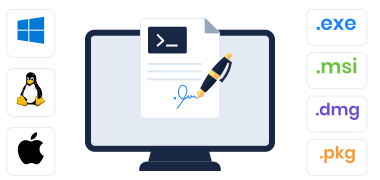
Different operating systems use different tools and file formats for code signing. Select your environment to review commonly used signing tools and the file types they support.
Explore practical guidance to compare validation options, evaluate code signing certificates, and understand secure signing practices.
These answers cover the most common questions buyers have when choosing, ordering, and renewing a code signing certificate.